
Benefits of Sports for Women: Building Confidence, Leadership, and Empowerment

Written by Linda Herron
Women Sports USA®
Sports can begin with something remarkably simple: a ball, a stick, a pair of running shoes, a swimming lane, a neighborhood court, or a coach who says, “Give it a try.” A girl may join because her friends are playing, because someone in her family loves the sport, because she wants to compete, or simply because something about the game catches her attention.
What begins as participation, however, can become something much bigger.
For generations of women and girls, sports have provided opportunities to discover physical strength, develop confidence, practice leadership, build relationships, respond to setbacks, and understand what it means to work toward something that cannot be accomplished overnight. These lessons are not limited to elite athletes, scholarship recipients, Olympians, or professionals. They can begin on community fields, school courts, neighborhood tracks, recreation teams, and anywhere girls are given meaningful opportunities to participate.
The benefits do not necessarily disappear when the final whistle blows. They can travel with women into classrooms, careers, relationships, leadership roles, families, and communities. The confidence developed through competition may later become the confidence to speak up in a meeting. The resilience learned after a difficult loss can help someone navigate an unexpected setback years later. The teamwork required on the field can influence how a woman collaborates, communicates, and leads throughout her life.
That is one of the most powerful benefits of sports for women. We may enter sports to learn how to play a game, but somewhere along the way, we often learn something about ourselves.

Sports Help Women Build Confidence Through Experience
Confidence is sometimes misunderstood as a personality trait. We may look at someone who appears self-assured and assume she was simply born that way. Sports show us another possibility: confidence can be developed through experience.
An athlete attempts something she has never done before. At first, she may struggle. She practices, receives feedback, makes mistakes, adjusts, and tries again. Eventually, something that once felt difficult begins to feel familiar. Instead of simply being told she is capable, she has evidence that she can learn.
Confidence built through sports can become something athletes carry into every area of life, a connection we explore further in The Confidence Advantage.
Those experiences accumulate. The first successful pass, the first race completed, the first difficult skill mastered, the first starting position earned, or the first time an athlete recovers after making a mistake can all contribute to a growing sense of capability. None of those moments alone creates confidence, but together they begin telling an athlete an important story about herself: I can learn. I can improve. I can handle difficult things.
Sports also teach a more durable form of confidence—the kind that does not depend on everything going well. An athlete eventually discovers that confidence does not mean knowing she will always succeed. It can mean trusting herself to respond when she doesn't.
That distinction becomes valuable far beyond competition. A woman entering an unfamiliar professional situation, taking on a leadership responsibility, changing careers, or confronting a difficult decision may already understand what it feels like to begin without all the answers and work her way toward competence.
Sports Teach Leadership Before We Have a Leadership Title
Leadership in sports is often associated with captains, but athletes begin practicing leadership long before anyone gives them a title. They learn to communicate under pressure, work with people who have different personalities, accept responsibility, support teammates, make decisions quickly, and contribute to something larger than their individual performance.
Sometimes leadership is obvious. It is the captain gathering the team before an important game or the veteran athlete helping younger players understand expectations. At other times, leadership is much quieter. It is arriving prepared, encouraging a struggling teammate, taking responsibility for a mistake, staying composed when circumstances become difficult, or doing the work that nobody applauds.

These experiences teach athletes that leadership is not simply about being in charge. It is about influence, responsibility, communication, and the standards we help create around us. Those lessons often become the foundation for leadership well beyond competition, as we explore in From Teamwork to Leadership.
Sports also provide something that leadership books cannot fully replicate: real-time consequences. Athletes make decisions while tired. They communicate while frustrated. They learn to manage emotions while competing. They discover that what they say and how they behave can affect the people around them.
A scoreboard can measure the outcome of a game. It cannot measure all the leadership development happening while the game is being played.
Resilience Is Built Through the Moments That Don't Go as Planned
Every athlete eventually encounters disappointment. A team loses. An athlete does not make the roster. She sits on the bench, misses the shot, struggles through a poor performance, loses a starting position, becomes injured, or works incredibly hard without achieving the result she expected.

Sports do not protect athletes from those experiences, and that is partly why they can become such powerful teachers.
The lesson isn't that disappointment shouldn't be painful; it's about understanding what actions to take afterward. Can you assess the situation without letting a single outcome define you? Are you open to feedback? Can you go back to practicing? Are you able to modify your strategy? Can you persist in your efforts even when progress is slower than anticipated?
Athletes learn that progress is rarely a straight line. A great performance can be followed by a terrible one. A winning season can become a losing season. An athlete who once started may suddenly find herself fighting for playing time.
Those experiences can gradually build perspective. Failure becomes information rather than identity. Mistakes become something to learn from rather than proof that someone does not belong. Learning how to reset, refocus, and continue is also a central part of developing mental strength in sports.
That lesson becomes especially important outside sports, where careers, relationships, businesses, and personal goals rarely unfold exactly as planned.
Team Sports Create Connection and a Sense of Belonging
Some of the greatest benefits of sports have very little to do with winning.
Teammates spend enormous amounts of time together. They practice, travel, compete, celebrate, struggle, laugh, lose, improve, and sometimes grow up alongside one another. Those shared experiences can create relationships that extend well beyond a season.
For girls and women, a supportive sports environment can be a space where they feel recognized, valued, and connected with others pursuing the same objectives. An athlete realizes that her contribution is important, even if she isn't the top scorer or the most prominent player. She starts to grasp the experience of both relying on others and having others rely on her.
That sense of connection matters because belonging can influence whether athletes feel confident, supported, and motivated to remain in sports.

Sports communities can also become much larger than the roster. Athletes meet coaches, mentors, officials, volunteers, alumni, families, and competitors. A young athlete may look across the field and see an older woman coaching. She may meet a former athlete who has become an official. She may encounter a mentor whose own sports journey helps her imagine possibilities she had not considered.
An athlete may initially join a team to play a sport. She can leave with a community.
Sports Can Help Women Appreciate What Their Bodies Can Do
Girls and women receive countless messages about how their bodies should look. Sports have the potential to introduce another question:
What can my body do?

A body is capable of running, lifting, jumping, throwing, swimming, skating, balancing, recovering, adapting, competing, and learning. Engaging in athletics allows girls and women to appreciate their bodies for their abilities rather than just their appearance.
That shift is significant because athletic development makes progress tangible. An athlete may notice that she can run farther than she could three months ago, lift more weight, move more efficiently, recover faster, or perform a skill that once seemed impossible. Her body becomes something she works with rather than something she merely evaluates from the outside.
At the same time, women's sports are increasingly recognizing that empowerment cannot mean asking female athletes to ignore their bodies in pursuit of performance. Strong athletes need adequate nutrition, recovery, sleep, appropriate training, injury prevention, and access to knowledgeable health professionals. The goal should not simply be producing athletes capable of performing today. It should include helping women remain healthy enough to enjoy movement throughout their lives.
The CDC reports that regular physical activity provides both immediate and long-term health benefits, including benefits for sleep, anxiety, heart health, bone health, balance, and chronic disease prevention.
True athletic empowerment respects both performance and health.
Competition Gives Girls Permission to Be Ambitious
Girls have historically received complicated cultural messages about ambition. Be successful, but not too competitive. Be confident, but not too assertive. Lead, but make sure everyone remains comfortable.
Sports offer a different environment. Competition tells an athlete that it is acceptable to pursue excellence openly. She can ask for the ball, challenge an opponent, fight for a starting position, attempt a personal record, and want to win.
That does not mean winning at all costs. Healthy competition includes sportsmanship, respect, integrity, and learning how to lose. But none of those values require women to minimize their ambition.
An athlete can want to win and respect her opponent. She can be confident and compassionate. She can compete fiercely and still be a supportive teammate.
Learning that those qualities can coexist is powerful.
Sports give girls opportunities to discover that striving for excellence is not something they need to apologize for.
Sports Teach Women How to Work With People Who Are Different From Them
Teamwork sounds easy until you actually have to do it.
Not every teammate thinks the same way. Some are outspoken. Others are quiet. Some respond well to direct feedback. Others need encouragement. Some become leaders immediately. Others contribute in ways that are less visible ways.
Athletes learn how to function inside that complexity.
They also learn that the role they want may not always be the role the team needs. A player may want to start but be asked to contribute from the bench. A high scorer may need to pass more. A veteran may need to help a younger athlete develop even when that athlete could eventually compete for her position.
These situations teach compromise, communication, accountability, and perspective. They also teach athletes that individual excellence and collective success do not have to be opposing goals.
Those lessons translate naturally into workplaces and communities, where progress also depends on people with different strengths, personalities, experiences, and responsibilities learning how to work together.
Coaches and Mentors Can Influence a Woman for Decades
Sometimes, the greatest benefit of sports comes from another person..
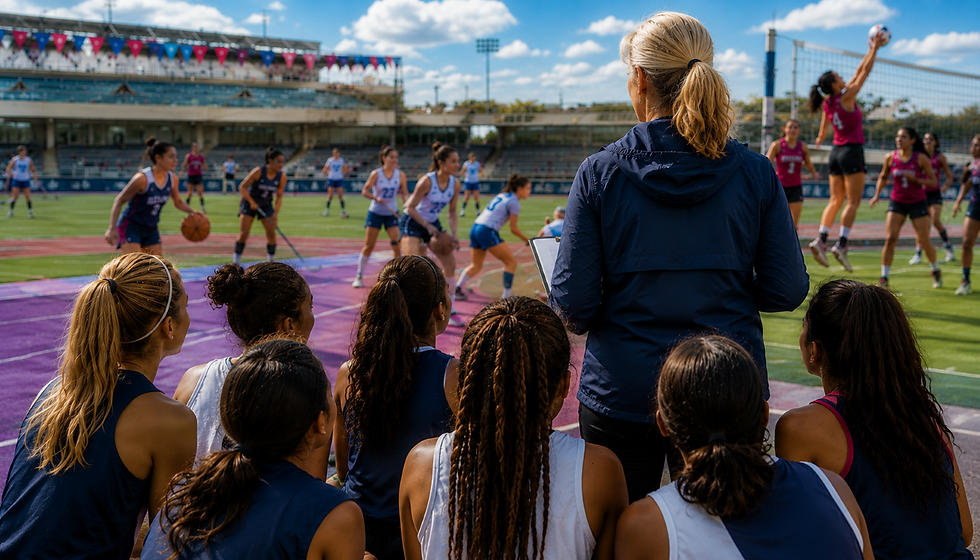
A coach recognizes potential an athlete has not yet recognized in herself. A teammate encourages her after a difficult performance. An older athlete demonstrates what the next level looks like. A mentor provides advice at exactly the moment it is needed.
The influence can last much longer than the relationship itself.
Former athletes often remember specific sentences from coaches decades later. They remember who believed in them, who challenged them, who expected more from them, and who helped them understand that one mistake did not define their ability.
That is why coaching is about far more than teaching technique. Coaches help create the environment in which athletes experience themselves. They can reinforce confidence, responsibility, discipline, curiosity, and belonging—or undermine those qualities.
The best coaches understand that they are developing people as well as players.
Sports Can Open Educational and Professional Doors
For some women, athletics also creates tangible opportunities.
Sports can connect athletes with schools, universities, mentors, professional networks, internships, coaching careers, sports administration, athletic training, officiating, media, technology, business, and many other fields surrounding competition.
Not every athlete will receive a scholarship, nor should the value of youth sports be measured by whether she does. But exposure to organized sports can introduce girls to environments, people, and possibilities they might otherwise never encounter.
The sports industry itself also contains far more careers than many young athletes initially realize. The people making sports possible include coaches, physicians, athletic trainers, physical therapists, dietitians, officials, broadcasters, photographers, journalists, marketers, executives, event professionals, researchers, and entrepreneurs.
A girl who enters sports believing the only role available is “athlete” may eventually discover an entire professional world around the game.
That is another reason representation matters. Girls need to see women throughout the sports ecosystem, not only on the field.
The Lifelong Benefits of Sports for Women
One of the most limiting ideas about athletics is that its value belongs primarily to young people. Movement can continue to provide purpose, strength, confidence, and connection at every age, even as the way we define ourselves as athletes changes.
Competitive careers end. Athletic identity does not necessarily end with them.
The former athlete may become a coach, mentor, official, volunteer, sports parent, administrator, community organizer, or fan. She may begin running recreationally, join a local league, lift weights, hike, swim, cycle, or discover an entirely new sport decades after her original competitive years have ended.
The lessons can remain, too. She still understands preparation. She knows what it feels like to work toward a goal that takes months rather than days. She has experienced teamwork, accountability, mistakes, pressure, improvement, and persistence.
Even the relationship with movement can continue evolving. A woman who once trained to win may later exercise for health, strength, community, independence, or simply because movement continues to make her feel connected to herself.
The definition of athlete can change without disappearing.
Women's Sports Create Role Models for the Next Generation
Visibility creates possibility.
When girls see women competing, coaching, officiating, leading sports organizations, working in sports medicine, covering games, and making decisions, they receive a broader picture of where women belong.
Representation does not mean every girl will want to follow the same path. It means she gets to see that the path exists.
That is one reason preserving women's sports history matters. Today's opportunities did not appear automatically. Women advocated, organized, competed, coached, challenged rules, built programs, raised money, and created opportunities that future generations would inherit.
When those stories disappear, young athletes can mistakenly believe today's opportunities were always available.
They were not.
Understanding that history can create both gratitude and responsibility. One generation opened doors for another. Today's athletes have opportunities to walk through those doors—and eventually hold them open for someone coming behind them.
Expanding Access to Sports Expands Possibility
If sports can build confidence, leadership, resilience, health, relationships, and opportunity, then access matters enormously.
Not every girl begins with the same opportunities. Equipment can be expensive. Transportation can become a barrier. Quality coaching varies. Facilities may not be available. Some communities have abundant programs while others have very few.

Those differences matter because a girl cannot experience the benefits of sports if she never receives a meaningful opportunity to participate.
That makes access more than a sports issue. It becomes a community question.
Schools, recreation departments, sports organizations, businesses, nonprofits, coaches, volunteers, and families can all play roles in creating environments where more girls have opportunities to discover sports.
The goal should not be to turn every girl into an elite athlete.
The goal is to make sure that talent, curiosity, and potential are not lost simply because opportunity was unavailable.
Women's Sports Strengthen Communities
The impact of sports extends beyond individual athletes.
Teams bring families together. Sporting events create gathering places. Coaches mentor young people. Volunteers build programs. Former athletes return to give back. Local businesses support teams. Fans create traditions. Young athletes watch older ones and begin imagining their own futures.
One opportunity can create a ripple.
A girl joins a team. Years later, she becomes a coach. She introduces dozens of other girls to the sport. One of those athletes becomes an official. Another starts a community program. Another simply carries the confidence she developed through sports into an entirely different career.
We cannot always see where the ripple ends.
That is part of what makes sports so powerful.
The Real Power of Sports for Women
Women's sports have changed dramatically across generations. More girls are growing up able to see women competing at extraordinary levels. Women's professional sports are receiving greater visibility. Female athletes have stronger platforms. Research focused specifically on women athletes is expanding. Women are increasingly visible as coaches, officials, executives, medical professionals, broadcasters, and leaders throughout sports.
There is still significant work to do. Access is not equal everywhere. Resources remain uneven. Girls still leave sports for reasons that deserve attention. Women remain underrepresented in many leadership and coaching positions. Female athletes continue advocating for appropriate facilities, investment, research, media coverage, and respect.
But progress matters because every genuine opportunity creates possibility.
When a girl steps onto a field, court, track, course, rink, or into a pool, nobody can predict exactly where the experience will lead. She may become a champion, coach, executive, teacher, official, entrepreneur, mentor, mother, community leader, or something she has not yet imagined.
Most athletes will never become professionals.
That has never been the only point.
The real value may be found in the woman who knows how to speak up because sports taught her that her voice matters. It may be the leader who understands that success is rarely accomplished alone, the former athlete who can recover from failure without believing she is a failure, or the woman who continues moving decades later because sports helped make physical activity part of her identity.
Those outcomes will never appear in a record book.
They still count.
Sports cannot tell us exactly who a girl will become.
They can give her another place to discover who she already has the potential to be.
At Women Sports USA®, we believe the impact of sports reaches far beyond a final score. Every opportunity for a girl or woman to participate can become an opportunity to build confidence, practice leadership, discover strength, form meaningful relationships, and carry the lessons of athletics into every chapter that follows.
That is why we preserve the history, celebrate today's athletes, recognize coaches and trailblazers, and continue telling the stories that might otherwise be forgotten. Women's sports are not only about what happens during competition. They are about the opportunities created, the people influenced, the communities strengthened, and the next generation watching.
When we invest in women's sports, we are not simply investing in games.
We are investing in what women can become.
Dream. Believe. Achieve.

Linda Herron is the Founder of Women Sports USA®, a former Division I field hockey athlete, coach, author, and longtime advocate for preserving women’s sports history. Through storytelling, she celebrates the athletes, coaches, officials, and trailblazers who helped change the game.


Comments