
The Multi-Sport Advantage: Why Playing More Than One Sport Can Help Girls Grow

Written by Linda Herron
Women Sports USA®
A girl loves field hockey, but she wants to try basketball. She enjoys swimming, but her friends are signing up for softball. She is proud of what she has learned in one sport and curious about what she might discover in another.
The multi-sport advantage for girls begins with that curiosity. Playing more than one sport can give a girl opportunities to explore different skills, meet new teammates, build confidence, and discover what she truly enjoys.
Before each season turns into a decision about advancement, rankings, or recruitment, a girl should have the opportunity to experience various sports and discover where she feels comfortable.
The Multi-Sport Advantage for Girls Begins With Different Experiences
Every sport gives a girl something different to learn. In field hockey, she works to control her stick while looking for space and teammates. In basketball, she learns to pivot, pass, and make decisions under pressure. In softball, she practices staying ready even when the ball has not come her way for several innings.
Different activities introduce different movements, rhythms, and challenges. A girl may feel comfortable running down a field but need practice timing a swing. She might be quick to react, but she's still learning when to slow down and read a play.
The International Olympic Committee’s guidance on youth athlete development supports varied athletic experiences within an approach that values health, enjoyment, and long-term participation. The focus includes the whole child and the experiences that support her development over time. International Olympic Committee
Being skilled in one sport does not make a girl instantly skilled in another. She still needs instruction, practice, and patience. But she brings something with her: experience listening to a coach, working through mistakes, and returning to a skill until it begins to feel more natural.
Confidence Grows When Girls Have Permission to Be Beginners

Starting over can be uncomfortable. A girl who knows exactly where to stand on a field hockey field may feel unsure the first time she steps onto a basketball court. She may ask more questions or worry that everyone else already knows what to do.
This is where encouragement plays a crucial role. A supportive coach and a patient teammate can help her feel that she belongs as she learns. She doesn't need to prove her worth through her skill in the sport to receive kindness.
Picture a girl learning to catch a softball. At first, she turns away or closes her glove too soon. With instruction and practice, she begins to follow the ball more confidently. Then she makes the catch she has been working toward.
That moment gives her something to remember. She tried something unfamiliar, stayed with it, and improved. The next time she faces a new challenge, she has an experience she can draw on.
Adults can help her notice that progress. “You kept working on that catch” recognizes her effort without comparing her with anyone else. Girls need those reminders, especially when they are used to measuring themselves against the strongest player in the group.
Different Teams Teach Girls Different Ways to Contribute

A girl may excel as the top scorer in one sport while still honing her abilities in another. On one team, she knows everyone well, whereas on another, she is learning names and figuring out her role.
Those experiences can broaden her understanding of what it means to be a teammate. Sometimes she is the person others look to for help. Sometimes she is the one who needs encouragement, another demonstration, or a little patience.
There is value in knowing both sides. A girl who remembers what it feels like to struggle with a drill may be quicker to help someone else. A player who has experienced different roles may become more aware of the teammates whose contributions do not appear in the score.
Coaches help shape those lessons. When they give developing players attention, explain expectations clearly, and recognize effort throughout the team, they show girls that everyone has a place in the learning process.
A team becomes a stronger community when respect extends to every player.
Variety Can Support Healthy Development
Young athletes need opportunities to enhance their skills and aim to recover. Engaging in the same intense activity year-round can repeatedly stress the same parts of the body.
Children’s Healthcare of Atlanta explains that early sport specialization is associated with increased risks of overuse injuries and burnout. Its sports medicine guidance encourages varied sports experiences alongside recovery between seasons. Children’s Healthcare of Atlanta
Playing several sports does not guarantee protection from injury. Different activities can still place demands on the same muscles and joints. Training intensity, technique, and total activity all matter.
The question for families is whether the schedule supports the girl who is following it. She needs enough time to recover, eat well, sleep, and enjoy parts of her life beyond practice and competition.
This balanced approach is integral to coaching healthy athletes for life—nurturing the entire individual while aiding her sports development.
A Full Schedule Still Needs Room for Rest

Trying different sports across the year is different from squeezing several demanding teams into the same week. A girl who finishes one practice and heads directly to another may have little time to catch her breath, much less recover.
The American Academy of Pediatrics identifies excessive training and overscheduling as concerns in youth sports, including participation on multiple teams at the same time. Recovery needs to be considered across the athlete’s entire schedule. American Academy of Pediatrics
This takes communication. A coach may not know that a player has already completed another workout or spent the weekend competing in a different sport. Parents and coaches can make better decisions when everyone understands the full picture.
Girls also need to know they can speak honestly. Saying “I am tired” or “Something hurts” should lead to a conversation they feel safe having. Persistent pain or fatigue deserves attention from a qualified healthcare professional.
Rest is part of an athlete’s development. We can teach girls to value it from the start. The lessons athletes gain through rest and rebuilding are also explored in The Comeback Nobody Sees, a Women Sports USA® article about patience, identity, and recovery.
Let Her Discover What She Enjoys
Adults often notice a girl's ability before she has had time to understand her own interests. She runs fast, so someone suggests track and field. She throws well, so softball becomes the obvious choice. She is tall, so people assume she wants to play basketball.
Those suggestions may introduce her to something she loves. But her voice belongs in the decision, too.
She may enjoy the strategy of one sport, the friendships in another, or the satisfaction of working toward an individual goal. She might have a passion for a sport in which she hasn't yet achieved excellence. Enjoyment deserves attention even when a trophy or starting position is not part of the experience. Every positive athletic experience can contribute to the lasting ways sports build confidence and leadership in girls and women.
Trying different activities gives her time to sort through those feelings. A season can be worthwhile even if she decides not to return. She has learned something about herself, and that knowledge can help guide her next choice.
Her Athletic Story Can Keep Growing
Being known for a sport can bring pride. A girl may love being the field hockey player, the swimmer, or the pitcher. Her team and the time she spends competing can become an important part of her life.
As she grows, her interests and circumstances may change. Experiencing different sports can help her see that she has several ways to stay active, challenge herself, and connect with others.
She may eventually choose one sport. She may play several throughout school. Years later, she may join a recreational league or try an activity she never had the chance to learn as a child.
We want girls to have that sense of possibility. That sense of possibility was built by earlier athletes whose courage expanded confidence and opportunity for the generations who followed. Explore their influence in The First Generation: How Women’s Sports History Created Confidence and Opportunity. The athlete within them can continue to grow, even when the uniform, the setting, or the goal changes.
Opportunity Should Be Within Reach
Encouraging girls to explore should never become another financial expectation placed on families. Club fees, equipment, travel, and transportation can make even one organized sport difficult to manage.
Access to different sports is part of the larger story of opportunity created through Title IX and women’s sports, but equal access still depends on resources, programs, and community support.
There are alternative methods to introduce diversity. School programs, community recreation, beginner clinics, and informal play provide girls with opportunities to explore new activities. Engaging in a game of catch at a park or shooting hoops with a friend can serve as a significant starting point.
Schools and community organizations can help by offering equipment loans, affordable programs, and opportunities to participate before making a season-long commitment. Welcoming older beginners matters, too. A girl should not feel that she has missed her chance because she did not start when everyone else did.
Expanding opportunity means paying attention to the practical barriers families face. A welcoming invitation has more value when a girl can actually accept it.
Parents and Coaches Can Keep the Door Open
One of the most useful questions an adult can ask is, “What would you like to try?” Another is, “How are you feeling about what you are doing now?”
Then comes the listening. A girl may be excited about a new challenge. She may love her current team but want a break after the season. She may need reassurance that exploring another sport does not mean disappointing the people who have supported her.
Coaches can help by communicating expectations and respecting a girl’s broader interests. Families can help by reviewing the schedule together and ensuring her enthusiasm isn't lost amid the demands of participation.
A girl who prefers one sport deserves that same care. Playing multiple sports is an opportunity, not a requirement. Her age, health, goals, resources, and preferences all belong in the conversation.
Give Girls Room to Grow
We do not need to know a girl’s best sport the first time she picks up a stick, a ball, or a glove. We can give her instruction, encouragement, and time to discover what she wants to pursue.
Along the way, she may learn to ask for help, welcome a teammate, recover from a mistake, or take pride in something that once felt difficult. These experiences deserve recognition alongside the scores and results.
The multi-sport advantage is the opportunity to discover more of what she can do and more of what she loves. When families, coaches, and communities make room for that discovery, they help girls build athletic experiences they can carry forward.
Give her room to try. Give her time to grow. Let her help choose the path.
At Women Sports USA®, we celebrate the athletes, coaches, and communities creating opportunities for girls and women to thrive in sports. Every story matters—and every girl deserves a chance to discover her own.
Dream. Believe. Achieve.

Linda Herron is the Founder of Women Sports USA®, a former Division I field hockey athlete, coach, author, and longtime advocate for preserving women’s sports history. Through storytelling, she celebrates the athletes, coaches, officials, and trailblazers who helped change the game.


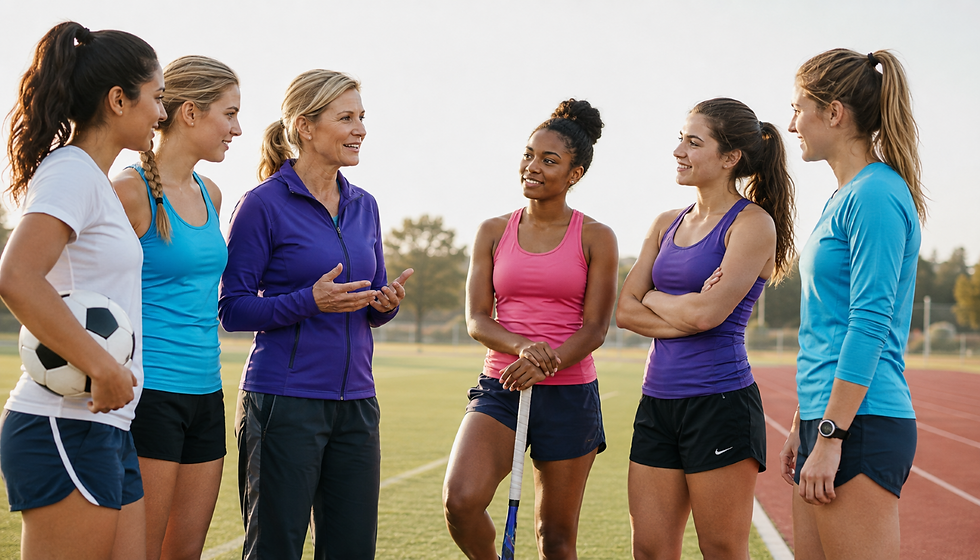
As a coach, I appreciate this article’s focus on giving girls room to explore. Playing multiple sports can build skills, confidence, and a lasting love of movement—as long as rest and balance remain part of the experience.