
Keeping Girls in the Game: Why Girls Drop Out of Sports—and How We Can Change That

Updated: Aug 14
Written by Linda Herron
Women Sports USA®
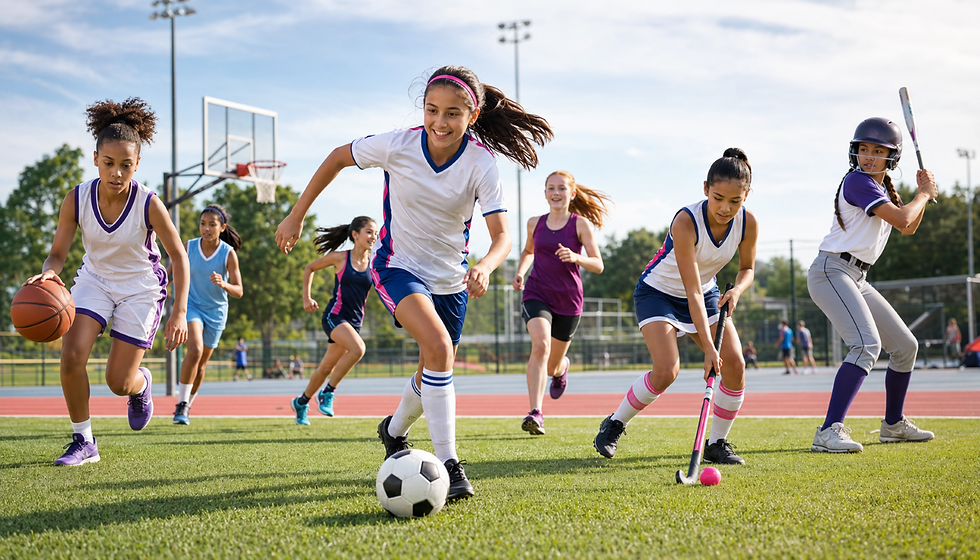
Girls enter sports with energy, curiosity, and a desire to belong. They discover what their bodies can do, learn how to work with teammates, and begin building confidence that can stay with them throughout their lives.
But as girls grow older, many begin stepping away from sports. Some lose interest, but many leave for reasons that have little to do with the game itself. They may face rising costs, limited opportunities, negative coaching experiences, body-image concerns, pressure to specialize, or the feeling that they no longer belong.
If we want more girls to experience the lifelong benefits of athletics, we must do more than invite them to participate. We must create environments that make them want—and feel able—to stay.
That work can begin early—through welcoming programs, encouraging role models, and stories that introduce girls to sports as places of teamwork, fair play, and belonging.
Understanding Why Girls Drop Out of Sports
Understanding why girls drop out of sports requires us to listen carefully to their experiences and recognize that there is rarely one single reason.
Research from the Women’s Sports Foundation shows that girls encounter barriers including unequal opportunities, rising costs, social pressures, and limited support—especially during the critical adolescent years.
There is rarely one reason a girl leaves her sport. Her decision is often shaped by several experiences that gradually take away the joy she once felt.
The game may become more competitive. The financial commitment may grow. Practices may demand more time, and the pressure to perform may increase. A girl who once played because she loved being with her friends may begin to feel that only the most talented athletes matter.
Other girls leave because they do not see a future for themselves. They may not have women coaches, athletes, officials, or leaders to look up to. They may receive less attention, fewer resources, or poorer facilities than boys participating in similar programs.
When girls repeatedly receive the message that their sports are less important, it becomes harder for them to believe that their participation matters.
When Sports Stop Feeling Fun
Fun is not the opposite of competition. Athletes can work hard, pursue ambitious goals, and compete seriously while still enjoying the experience.
Problems arise when winning becomes the only measure of success.
Constant criticism, fear of making mistakes, limited playing time, and pressure from adults can transform a positive experience into a source of anxiety. If every practice feels like a test and every game becomes a judgment of an athlete’s worth, the emotional cost can become too high.
Coaches and parents should regularly ask girls what they enjoy about their sport. Their answers may include improving a skill, spending time with teammates, feeling strong, traveling to competitions, or simply being part of something.
Those answers matter. They remind us that girls participate for many reasons—and winning is only one of them.
Confidence, Body Image, and the Adolescent Years
Adolescence can be an especially vulnerable time for girls in sports. Research from Women in Sport highlights how puberty, gender stereotypes, inadequate opportunities, and a lack of understanding about girls’ changing needs can contribute to teenage girls leaving sports. Their bodies are changing while they are becoming more aware of how others see them.
Uniforms may make some athletes feel uncomfortable. Social media can encourage unrealistic comparisons. Comments about weight, appearance, or body shape—even when presented as athletic advice—can damage confidence and affect a girl’s relationship with exercise.
As explored in our article Coaching Healthy Athletes for Life, sports environments should celebrate what girls’ bodies can accomplish rather than how they look. Strength, coordination, endurance, recovery, and overall well-being should matter more than appearance.

Girls also need access to reliable information about nutrition, menstruation, injury prevention, and physical development. These subjects should not be treated as embarrassing distractions. They are part of supporting the whole athlete.
When girls understand their changing bodies and feel respected within their sports, they are better prepared to participate with confidence.
The Cost of Participation Can Push Girls Out
Talent and enthusiasm cannot overcome every financial barrier.
Registration fees, uniforms, equipment, private coaching, club dues, tournament travel, and transportation can make sports inaccessible to many families. The Aspen Institute’s Project Play documents how participation costs and family income can create dramatically different youth-sports experiences. When advanced opportunities depend on increasingly expensive programs, girls from lower-income households may be left behind.
Communities can respond by offering equipment exchanges, transportation assistance, scholarships, reduced fees, and recreational programs that do not require year-round commitments.
Schools and sports organizations can also be more transparent about costs. Families should understand the full financial commitment before a season begins and know where to find assistance without feeling embarrassed about asking.
A girl’s opportunity to play should not depend entirely on what her family can afford.
Not Every Girl Wants the Same Athletic Experience
One of the greatest mistakes in youth sports is assuming that every participant has the same goal.
Some girls want to compete in college. Others want to represent their school, stay active, enjoy time with friends, or continue playing a sport they love without making it their entire identity.
All of those goals are valid.
When programs become centered exclusively on elite development, girls who are not seeking scholarships or high-level competition may feel there is no place for them. Communities need multiple pathways, including recreational leagues, school teams, competitive clubs, informal programs, and opportunities for girls to try new sports.
A strong sports system does not serve only the most advanced athletes. It creates space for girls with different interests, abilities, backgrounds, and ambitions.
Positive Sports Experiences Can Begin with a Story
Girls can begin learning about teamwork, sportsmanship, and belonging long before they join their first team. Books and stories give young readers a welcoming introduction to sports while helping them understand the values that make participation meaningful.
In the children’s book Twins Mac & Madi Play Field Hockey, the twins discover field hockey while learning about good sportsmanship, fair play, teamwork, and encouraging others. The story presents sports as a place where children can try something new, make mistakes, support their teammates, and have fun while learning.

Those early messages matter. When girls are introduced to sports through stories that emphasize participation and character—not only winning—they begin to see athletics as a place where they can belong.
Parents, teachers, coaches, and community programs can use sports-themed books to begin conversations with young children:
What does it mean to be a good teammate?
How can we show respect when we win or lose?
Why is it important to play fairly?
What can we do when a new skill feels difficult?
How can we encourage someone who is still learning?
Keeping girls in the game begins with creating positive experiences from the very start. A child who learns that sports are built on joy, fairness, friendship, and mutual respect is more likely to approach participation with confidence—and to understand that her contribution matters.
How Coaches Can Help Keep Girls in the Game
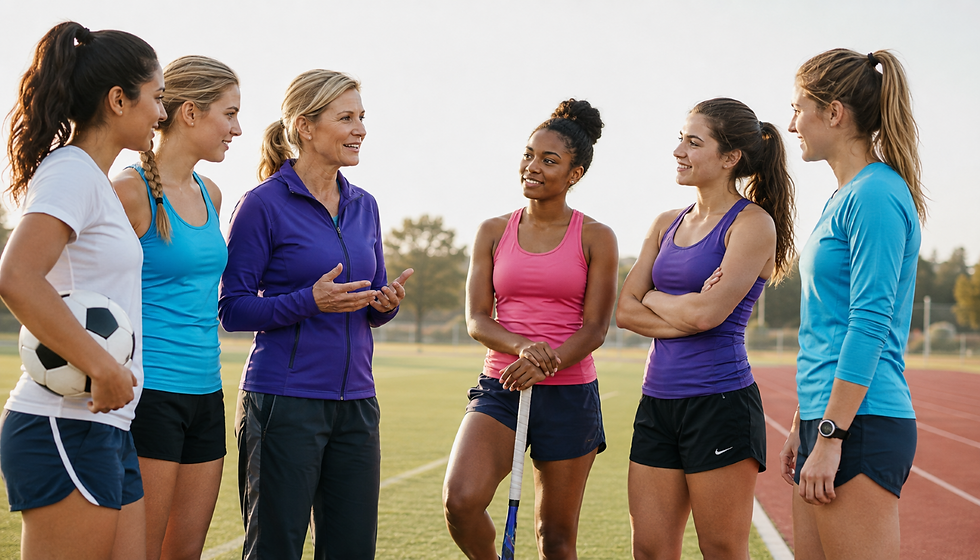
As women coaches shape the next generation, they can become some of the most influential people in young athletes’ lives.
Girls are more likely to remain engaged when coaches make them feel respected, supported, and valued. That does not mean lowering expectations. It means teaching with purpose, communicating clearly, and recognizing effort and growth alongside results.

Coaches can help by:
Learning what motivates each athlete.
Creating an environment where mistakes are treated as part of learning.
Addressing bullying, favoritism, and disrespect immediately.
Giving athletes meaningful opportunities to contribute.
Avoiding harmful comments about weight or appearance.
Encouraging rest, recovery, and participation in other interests.
Making communication with athletes and families clear and consistent.
Showing girls that leadership takes many different forms.
Girls remember how a coach made them feel. A coach who sees their potential can help them develop confidence that extends far beyond the playing field.
Parents Can Support the Athlete Without Increasing the Pressure
Parents want their children to succeed, but support can sometimes become pressure without anyone intending it.
After a competition, a girl may not need an immediate analysis of every mistake. She may need time, encouragement, and a reminder that her value is not determined by the scoreboard.
Parents can ask simple questions:
What did you enjoy today?
What did you learn?
How can I support you?
These questions give the athlete room to lead the conversation. Parents should also watch for signs of burnout, anxiety, injury, or loss of enjoyment. Sometimes a girl needs a break, a different team, another coach, or an opportunity to try a new sport. Changing direction does not mean she has failed. The goal should not be to keep a girl in one particular sport at all costs. The goal is to help her maintain a healthy, positive relationship with movement and athletics—one that can support her as a lifelong athlete at every age.
Representation Helps Girls See a Future in Sports
Girls need to see women participating throughout the entire sports world—not only as athletes, but also as coaches, officials, athletic trainers, administrators, broadcasters, executives, and community leaders.
Representation sends a powerful message: You belong here, and there are many ways for you to stay involved.
Schools and sports organizations can invite women athletes and professionals to speak with young teams. They can recruit and develop more women coaches. They can celebrate girls’ sports with the same enthusiasm, promotion, and visibility given to boys’ programs.
When girls see women leading, competing, and shaping the future of sports, their own possibilities become easier to imagine.
Keeping Girls in Sports Requires All of Us
There is no single program that will solve the dropout problem. Keeping girls in sports requires a shared commitment from coaches, parents, schools, leagues, community organizations, sponsors, and sports leaders.
We must listen when girls tell us what they need. We must create affordable opportunities, provide safe and welcoming environments, and recognize that success looks different for every athlete.
Most importantly, girls need to know that they matter whether they become college athletes, recreational players, coaches, officials, lifelong fans, or adults who continue moving simply because it makes them feel strong.
Every season a girl remains connected to sports gives her another opportunity to grow in confidence, develop friendships, practice leadership, and discover what she is capable of achieving.
The Goal Is More Than Participation
Keeping girls in the game is not only about maintaining team rosters. It is about protecting access to experiences that can shape their lives.
Sports can teach girls to speak up, recover from disappointment, trust their abilities, and take up space with confidence. Those lessons can follow them into classrooms, careers, families, and communities.
Girls should not have to overcome unnecessary barriers to receive those benefits. They deserve sports environments built to support who they are today and who they are becoming.
When we listen to girls, value their experiences, and give them meaningful opportunities to participate, we do more than keep them in the game.
We show them that the game belongs to them, too.
At Women Sports USA®, we believe every girl deserves the opportunity to experience the confidence, connection, and lifelong strength that sports can provide. By working together, we can create a future where girls do not simply enter the game—they feel supported, celebrated, and inspired to stay.
Honoring the Past. Empowering the Future.
Dream. Believe. Achieve.

Linda Herron is the Founder of Women Sports USA®, a former Division I field hockey athlete, coach, author, and longtime advocate for preserving women’s sports history. Through storytelling, she celebrates the athletes, coaches, officials, and trailblazers who helped change the game.

Comments