
From Hand-Me-Downs to the Rising Cost of Youth Sports

A borrowed glove can help a girl begin. Helping her stay in the game requires sustained community support.
Written by Linda Herron
Women Sports USA®
Sometimes a borrowed glove, a used stick, or a former teammate’s uniform is all a girl needs to get started. But equipment addresses only the most visible expense. The rising cost of youth sports includes registration fees, club dues, training, and travel—all part of the larger commitment that follows.
For many families, the real challenge is helping a child stay in a sport after she starts. A low-cost introductory program may spark her interest, but the next level can demand far more money, travel, and time. Those modern barriers echo an older question in girls’ sports: who receives a genuine opportunity to participate over time, not simply an invitation to begin?
Our article, When the Cost of Girls’ Sports Keeps Players on the Sidelines, explores the expenses families face and the support that can make participation possible.
Looking Back Without Ignoring Who Was Excluded
Many people remember earlier youth sports as part of neighborhood life, supported by school teams, volunteer coaches, and shared equipment. That model often kept costs manageable and connected young athletes to their communities. Even then, however, access was not equal. Girls often had to fight for the teams, facilities, coaching, and recognition that boys were more likely to receive.
The Women’s Sports Foundation’s 2022 report, 50 Years of Title IX: We’re Not Done Yet, shows both how far girls’ sports have come and how much work remains. According to the report, girls’ high school participation was nearly 12 times its 1972 level, yet girls still had fewer participation opportunities than boys had before Title IX. Building on that progress means helping more girls not only begin a sport but also develop their skills and continue playing.
Lasting participation requires more than a place on a roster. It depends on regular practice time, capable coaching, safe facilities, and the confidence that a girl can keep going from one season to the next. Today, maintaining those foundations is increasingly difficult because participation often demands more time and money from families.
When a Season Becomes a Bigger Commitment
One source of these growing demands is the expansion of youth sports as a business. School teams, recreation leagues, competitive clubs, and informal games still exist side by side, but families now face many more paid options. By 2017, TIME described travel teams, private lessons, and specialized training as part of a multibillion-dollar industry. These opportunities can provide strong coaching and higher-level competition while also reshaping what families believe a child needs to develop.
What begins as a single season can quickly expand into months of practices, extra clinics, distant tournaments, camps, and preparation for the next team. Those additions sit alongside the essential costs of coaches, facilities, officials, insurance, and equipment that strong programs must fund. The key question is whether families can choose a smaller, local commitment while still giving their children a meaningful place to learn and compete.
The cumulative effect is easy to overlook. An additional clinic, a new uniform package, or a weekend tournament may seem manageable on its own. Taken together, however, those expenses can turn an ordinary season into a year-round obligation, placing growing pressure on a family’s budget, schedule, transportation, and time together.
What the Numbers Reveal About the Rising Cost of Youth Sports
The findings from Project Play, an Aspen Institute initiative, show the scale of that financial pressure. In 2025, the initiative reported that U.S. families spent an average of $1,016 on a child’s primary sport in 2024—a 46% increase since 2019. Conducted with Utah State and Louisiana Tech universities, the survey examined youth sports broadly rather than girls’ sports alone. Even so, the findings help explain why many families must make difficult choices about how many sports and seasons they can afford, especially when more than one child participates.
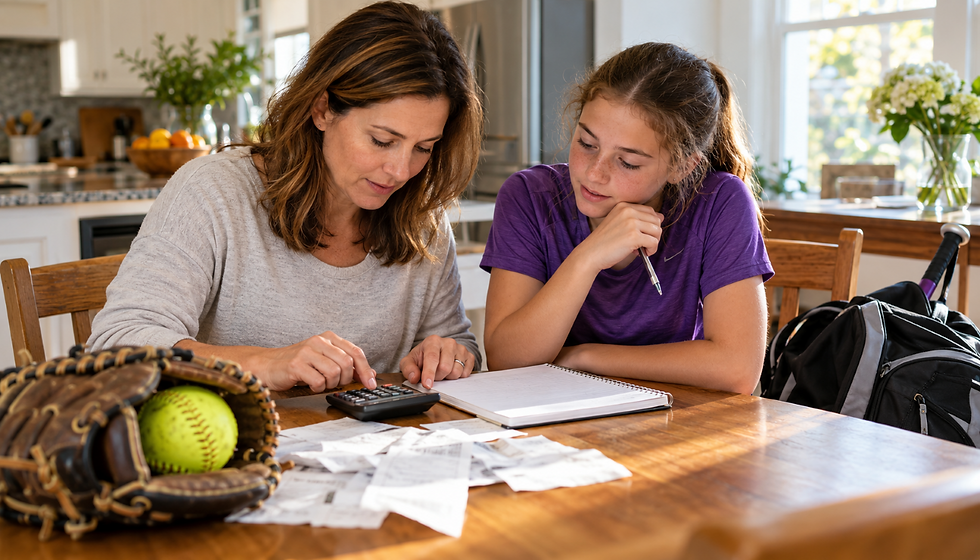
Every family’s circumstances differ, and spending more does not automatically mean a better program. Excellent coaching, skill development, and meaningful competition can all happen close to home. Still, travel, specialized lessons, and repeated fees add up quickly, leaving many parents to wonder whether spending less will narrow their child’s opportunities.
The tradeoffs behind those figures are rarely abstract. A family may have to balance one child’s travel schedule with another child’s activities, household expenses, or work obligations. Even when parents can manage the immediate cost, uncertainty about what comes next can make it hard to plan continued participation, especially when an “optional” opportunity may affect a child’s progress.
The Cost of Feeling Pressure to Keep Up
A clinic, extra team, or off-season program may seem voluntary, yet declining can feel like it limits a child’s opportunity to improve or make a school roster. In its 2025 research, Project Play, an Aspen Institute initiative, found that more than half of sports parents felt some or considerable pressure for their child to specialize in one sport, often with the goal of making a high school team. As the spending data cited earlier shows, this finding reflects youth sports broadly, not just girls’ sports. In principle, specialization is a choice; in practice, it can feel like an unwritten requirement.
For girls who discover a sport later than their peers, that pressure can be especially difficult. They need time to learn the basics, build confidence, and assess their interest before their families make a major investment. Programs can help by clearly explaining what is required, what is optional, and what each fee covers, giving families more confidence in their choices.
Before We Specialized, We Just Played: The Joy of Playing Different Sports reflects on giving children room to explore sports before deciding where their interests might lead.
A welcoming entry point can ease that pressure. Beginner clinics, flexible schedules, and development-focused teams let girls build skills without being measured against athletes who have trained for years. They also give families time to understand the sport and decide what level of commitment is right for them. For girls who continue, the challenge shifts from getting in the door to managing the broader costs of participation.
What Hand-Me-Downs Can—and Cannot—Address
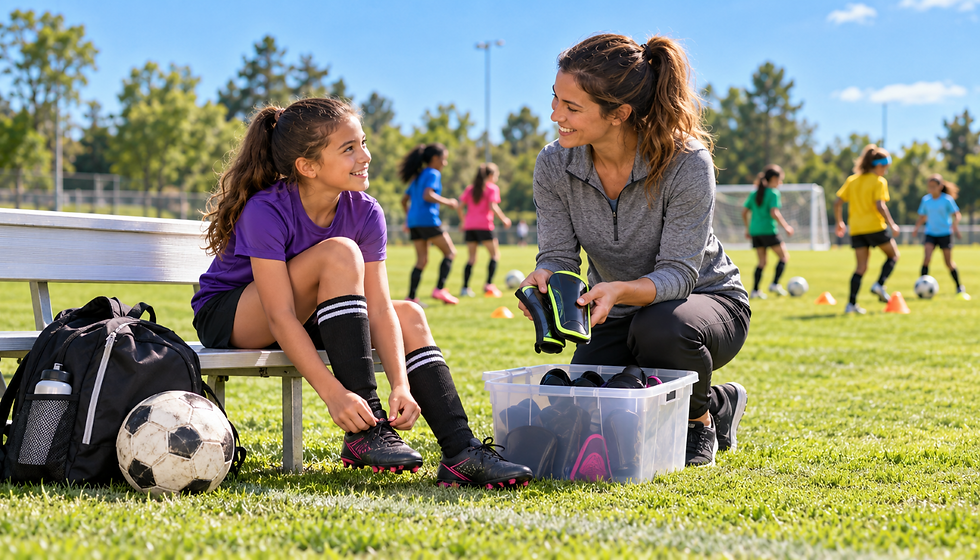
Equipment is one part of the broader support families may need. Shared gear and lending programs can spare a family from buying a glove, stick, pair of cleats, or uniform before a child knows whether she wants to continue, while allowing one player’s equipment to benefit the next. Yet gear cannot create a nearby team, provide transportation, replace a parent’s lost wages, or cover an overnight trip.
A girl may receive donated equipment and a registration scholarship yet still be unable to participate because practices are too far away or tournaments require hotel stays. Effective assistance must account for the entire season, not just one fee. That means considering transportation, required purchases, schedules, and competition costs while ensuring that families can request support through a straightforward, respectful process.

No single intervention can address every barrier. Equipment exchanges, fee support, carpools, and flexible payment plans can reduce direct costs and logistical burdens, while local competition can limit travel demands. Together, these measures reflect the practical realities of participation and make sustained involvement more feasible for families.
Making Affordable Sports Worth Choosing
Affordable programs should offer more than a lower price; they should give families a strong, credible option. Every girl deserves knowledgeable coaches, reliable facilities, purposeful practices, and meaningful competition. A local league can deliver those essentials by emphasizing instruction, safety, teamwork, and regular playing opportunities, creating a genuine alternative to more expensive pathways.
A positive team culture helps make those opportunities welcoming, so girls feel supported as they learn and contribute.
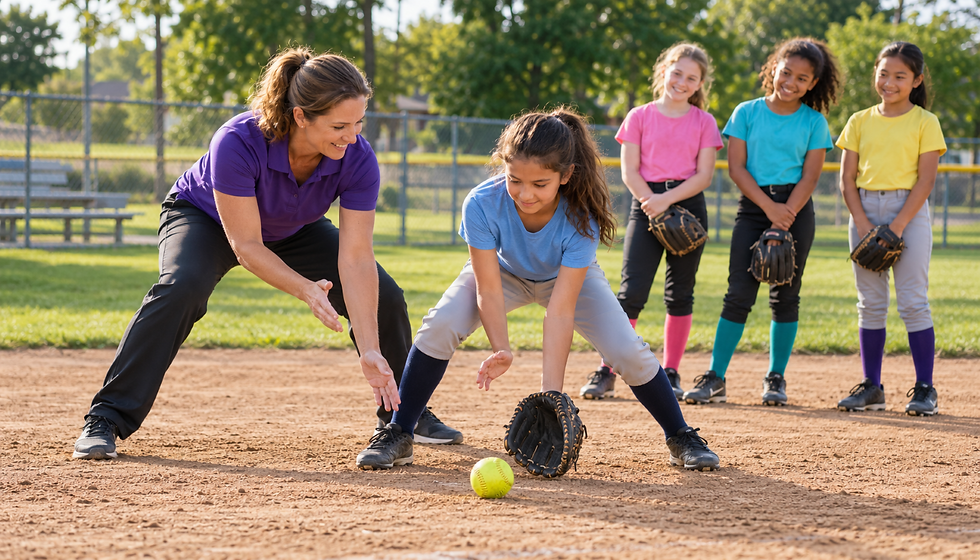
Communities, leagues, businesses, and donors can help create affordable options, but each has a different role. Funding can support facilities, coach development, transportation, equipment, and officials, while league policies can limit unnecessary travel, avoid frequent uniform changes, and disclose the full cost before registration. Decisions about both funding and program design should also reflect what girls value, where programs serve them well, and what makes continued participation difficult.
Schools and recreation departments can reinforce these efforts by coordinating schedules, sharing facilities, and making introductory programs visible and easy to join. Local sponsors can cover less visible expenses that often determine a season's success. Together, these contributions can help create a dependable path from a girl’s first practice to long-term participation and continue the tradition of shared support that has shaped women’s sports.
Passing Opportunity to the Next Generation
Women Sports USA® preserves the stories of the people and institutions that have sustained women’s sports. Behind many athletes is a coach who found equipment, a school that supported a team, a donor who covered a fee, or a neighbor who offered a ride. Their contributions show how opportunity and support allow talent to develop—and how the same principle can make participation sustainable today.
That history does not suggest recreating an earlier era or expecting quality sports to cost nothing. Instead, it points back to what lies at the heart of youth athletics: the chance to belong to a team, develop discipline, form friendships, and discover what sustained effort can make possible. In that light, affordability isn't separate from quality; it is part of building a stronger sports culture for everyone.
A hand-me-down glove can help a girl begin, but meaningful access also requires support for the costs equipment cannot cover. Welcoming beginners, giving families clear information, and extending assistance beyond registration can turn a first opportunity into lasting participation. Every girl should have room to try, time to learn, and a place to keep playing.
Dream. Believe. Achieve.
Keep the inspiration going.
Get women’s sports stories and interviews delivered to your inbox.
Whose story should we tell?
Help us recognize an athlete, coach, official, or trailblazer.
Help more stories reach the world.
Explore ways your organization can support our storytelling mission.

Linda Herron is the Founder and CEO of Women Sports USA®. She is a former Division I field hockey athlete and coach, an author, and a business finance executive with over 40 years of experience.


Comments