
Before the Mental Game Had a Name: Women in Sport Psychology
Women helped shape sport psychology through research, teaching, and work with athletes, deepening the understanding of confidence, focus, and performance under pressure.
Written by Linda Herron
Women Sports USA®
Long before mental preparation became common in sports conversations, athletes knew the nerves before competition, the frustration of mistakes, and the challenge of trusting themselves under pressure. Women in sport psychology helped turn those familiar experiences into questions worth studying and skills worth teaching. Their work helped athletes, coaches, and educators better understand the space between knowing how to perform and performing when it matters.
Sport psychology had roots before these women began their careers, but its role in athletic preparation was still taking shape. Their work helped advance the idea that confidence, attention, and responses to pressure deserved careful study. Women contributed as psychologists, researchers, teachers, and mentors, and their stories belong in the history of sports alongside the athletes and coaches whose achievements fill the record books.
This history matters because it changes how we understand the mental game today. The skills now discussed in practices, locker rooms, and coaching clinics were shaped by women who studied pressure, confidence, attention, motivation, and learning long before those ideas became mainstream in sports.
Understanding the Mental Game Before It Became Familiar
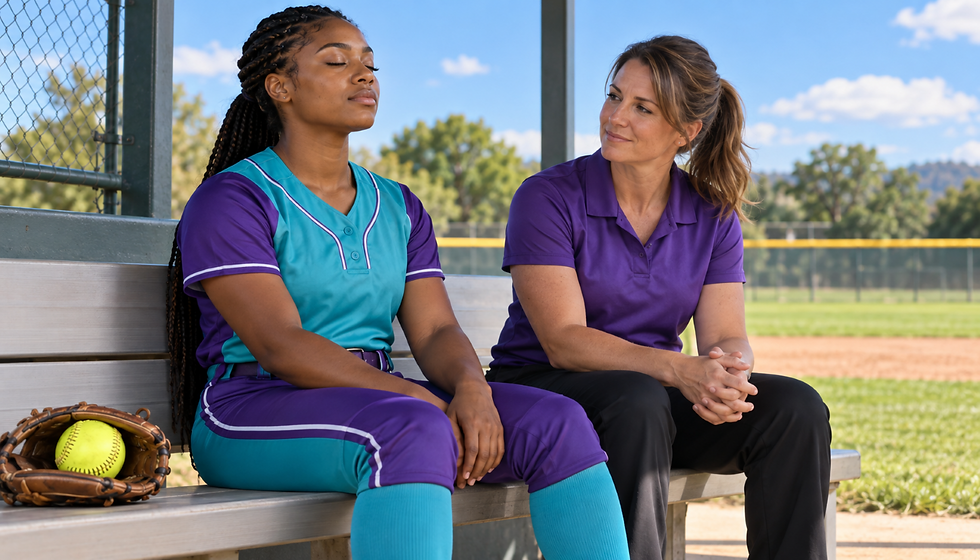
Picture a softball player getting ready for the next ball after missing a catch. Her physical skills have not disappeared, but her attention may still be on the error, the reaction from the sidelines, or the possibility of letting her teammates down again. The next play asks her to do something sport psychology would later study closely: recover her attention and return to the task in front of her.
That moment helps explain why the mental side of sport matters. Athletes practice movements, build strength, and learn strategy, but competition also asks them to manage distractions and respond to uncertainty. Studying those experiences created opportunities to move beyond broad instructions like “concentrate” or “be confident” and better understand what actually helps an athlete use those skills in competition.
Women were among the people pursuing those questions. Their contributions helped build a field in which an athlete’s thoughts, emotions, and experiences could be studied seriously and applied in practical ways.
Dorothy Hazeltine Yates Brought Psychology Into Athletic Preparation
In the early 1940s, Dorothy Hazeltine Yates, a psychologist at San Jose State College, worked with college boxers on relaxation and mental preparation. Her work predated mental performance consulting as a familiar career path, making it an early example of psychological techniques used directly in athletic preparation.

Historical research by Alan Kornspan and Mary MacCracken documents Yates’s work, including her use of relaxation paired with a mental cue to support composure and attention. Their study, Psychology Applied to Sport in the 1940s: The Work of Dorothy Hazeltine Yates, helps preserve an early example of a woman applying psychological knowledge to athletic preparation.
Her place in this history expands how we recognize women’s contributions to sports. Yates worked with male boxers, showing that women’s expertise helped shape athletic preparation across gender lines. Her contribution was the knowledge she brought, the questions she investigated, and her willingness to explore a developing area of practice.
For readers today, her story offers useful perspective: the conversation about the mental game did not begin with a recent championship interview or popular training program. Women were helping investigate these questions generations ago.
Dorothy V. Harris Helped Build a Profession
Dorothy V. Harris helped lay a stronger foundation for sport psychology through education, research, and work with athletes. She joined Penn State in 1970 and developed one of the country’s earliest graduate programs in sport psychology. The Association for Applied Sport Psychology recognizes her as the first resident sport psychologist at the United States Olympic Committee’s training center and notes her leadership of a 1972 research conference on women in sports. Today, her achievements are honored through the association’s Dorothy V. Harris Memorial Award.
Harris also knew athletic life through participation. As an undergraduate at what is now James Madison University, she competed in field hockey, basketball, and swimming. Her JMU Athletics Hall of Fame biography documents that background along with her books, publications, and leadership in women’s sports. Her career brought together an athlete’s experience and a scholar’s commitment to understanding sport.
Establishing a graduate program creates a different kind of sporting legacy. Students become researchers, educators, and practitioners. They carry what they learn into new settings, ask new questions, and prepare others to continue the work. In that way, one person’s influence can reach athletes she never meets.
Penn State’s account of Harris’s legacy recognizes her graduate training program and her role as the first woman to serve as president of the North American Society for the Psychology of Sport and Physical Activity. Her work helped the field grow through both knowledge and professional leadership.
Women in Sport Psychology Expanded the Field
The history extends beyond Yates and Harris. Scholars including Jean Williams, Diane Gill, Deborah Feltz, Joan Duda, Tara Scanlan, Maureen Weiss, Penny McCullagh, and Carole Oglesby helped build the scholarship and professional communities through research, teaching, mentoring, and leadership.
A historical overview in Essentials of Exercise and Sport Psychology highlights their contributions, including Jean Williams’s applied sport psychology textbook. It also discusses research by Vikki Krane and Diane Whaley that sought to restore women’s contributions to the field’s historical record.
That effort to document women’s work matters. When a history leaves out its teachers, researchers, and mentors, readers receive an incomplete picture of progress. Naming these women helps keep the connection between the knowledge people use today and the people who helped develop it.
Their careers reveal how much progress in sports happens away from competition. A research question, classroom discussion, publication, or years of mentoring can influence how athletes are understood and supported. Those contributions deserve a place in the story.
What This History Means for Coaches and Athletes Today
The practical value of this history becomes clear when we consider the language used around athletes. Telling a player to “be confident” leaves an important part of the work unfinished. Confidence becomes more useful when an athlete has a way to build it, and focus becomes more meaningful when someone helps her understand what deserves her attention.
The legacy of these trailblazers encourages a more thoughtful approach to those conversations. It invites coaches to become curious about an athlete’s experience and specific about the task ahead: what distracted her, what she noticed, what she can learn from the play, and what she needs to do next.
Our article, Coaching the Mind: How Coaches Build Mental Skills for Athletes, explores how coaches can bring mental skills into everyday athletic development. These conversations can become part of how a team practices, prepares, and learns together.
The same approach matters after an error. A missed catch provides information, but the next play still needs the athlete’s attention. Giving her a clear way to regroup makes the instruction to “move on” more meaningful. In How Athletes Can Reset After a Mistake, we explore the transition from reacting to an error to getting ready to contribute again.
Preserving the Women Behind the Mental Game
The women who helped shape sport psychology deserve recognition for the substance of their work. They investigated questions, published findings, educated students, established programs, and built professional organizations. Their achievements expanded what could be studied and taught about the athletic experience.
Remembering them also gives girls more ways to imagine a future in sports. A young athlete who wonders why pressure changes how she plays may someday become a researcher. A teammate curious about motivation may become an educator or train to work with athletes. Learning this history shows that women have helped create those possibilities.
These stories belong within the broader history of women’s sports and the trailblazers who changed the game. The growth of sport includes the knowledge that helps people prepare, learn, and keep participating. Preserving that history means recognizing the women whose contributions made the athletic experience better understood.
The next time a player gathers herself after a mistake and gets ready for another ball, consider the long history behind the conversation about her mental game. Women helped build that understanding, and their names deserve to travel with the lessons they left behind.
By remembering the women who helped athletes understand the mental game, we give the next generation a fuller picture of what women have given to sports and what they can continue to build.
Women Sports USA® celebrates athletes, preserves women’s sports history, and shares stories that help future generations see what women have built in sport and why that legacy matters.
There are more stories to discover—and more women whose contributions deserve to be remembered. Subscribe to Women Sports USA® to receive the latest athlete, coach, and trailblazer stories in your inbox.

Linda Herron is the Founder and CEO of Women Sports USA®, a former Division I field hockey athlete, coach, author, and business finance executive with over 40 years of experience. She uses storytelling to honor athletes, coaches, officials, and pioneers, preserving the history of women’s sports and inspiring future generations.


Comments