
1920 Olympic Women's Singles Tennis Debut: A New Era Begins in Antwerp

Updated: Jul 11
The 1920 Olympic women's singles tennis tournament at the Antwerp Olympics marked a defining moment in women's sports history.
Just two years after the end of World War I, female athletes returned to the world's greatest sporting stage, demonstrating extraordinary talent, resilience, and determination. Led by French champion Suzanne Lenglen, whose gold medal performance captivated international audiences, the tournament helped elevate Olympic tennis and strengthened the case for greater opportunities for women athletes worldwide. More than a century later, the legacy of Antwerp continues to inspire every generation of girls and women who dream of competing at the highest level.
The 1920 Antwerp Olympics marked one of the defining moments in women's tennis history. Led by Suzanne Lenglen's gold medal performance, the tournament helped establish women as elite international competitors and inspired generations of Olympic athletes.
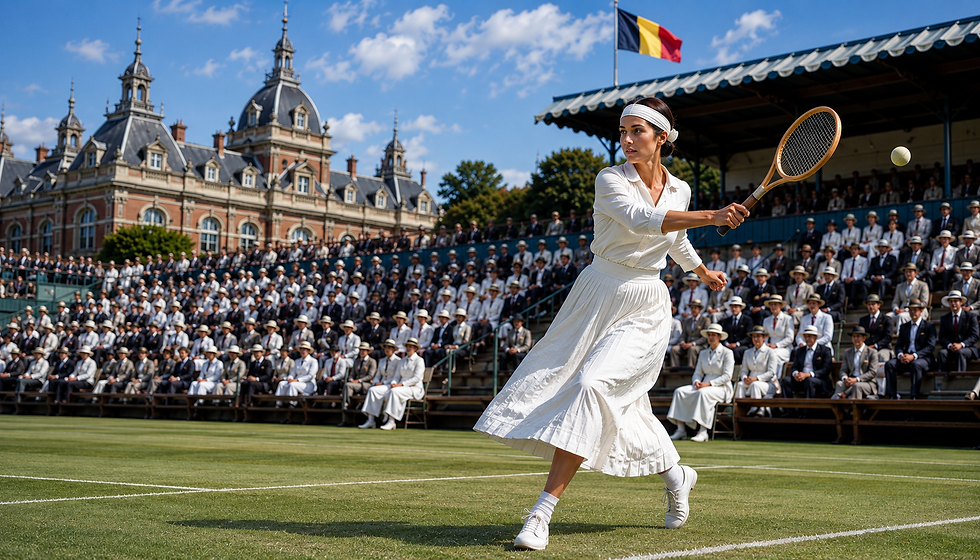
At a Glance
Category | Information |
Event | Women's Singles Tennis |
Olympic Games | 1920 Summer Olympics |
Host City | Antwerp, Belgium |
Competition Dates | August 16–24, 1920 |
Gold Medal | Suzanne Lenglen (France) |
Silver Medal | Dorothy Holman (Great Britain) |
Bronze Medal | Kathleen McKane Godfree (Great Britain) |
Court Surface | Outdoor Grass |
Historical Significance | Helped establish women's tennis as one of the premier Olympic sports and elevated female athletes on the international stage. |
For today's athletes, the tournament represents much more than medals. It symbolizes resilience, opportunity, and the growing recognition of women as elite competitors.
The 1920 Summer Olympics were held from April 20 to September 12, 1920, in Antwerp.
These Games carried tremendous significance. They were the first Olympics after the devastation of World War I. Nations came together once again through sport, using athletic competition as a symbol of peace and international unity.
Women's participation remained limited compared to men's events, but tennis stood out as one of the few sports where women were already demonstrating exceptional skill and attracting international attention.
The women's singles tournament featured many of Europe's finest players and showcased a style of athleticism, precision, and endurance that challenged outdated beliefs about women's physical capabilities.
Key People
Suzanne Lenglen - 1920 Olympic women's singles tennis

No player defined the 1920 tournament more than Suzanne Lenglen of France.
At just 21 years oldears old, Lenglen captured the Olympic gold medal in women's singles, dazzling spectators with a fast-paced, aggressive style unlike anything many had previously seen.
She also won:
Women's Doubles Gold
Mixed Doubles Bronze
Her dominance helped transform women's tennis into one of the world's premier spectator sports.
Often called "La Divine," Lenglen became one of the first global female sports superstars.
Suzanne Lenglen's victory wasn't just an Olympic gold medal—it was a powerful statement that women belonged on the world's biggest sporting stage.
Dorothea Lambert Chambers
The British tennis legend earned the silver medal after reaching another Olympic final.
Already a multiple-time Wimbledon champion, her success connected one generation of women's tennis pioneers with the next.
Dorothy Holman
Holman claimed the bronze medal, giving Great Britain two women on the Olympic singles podium.
Timeline: The Road to Women's singles tennis featured at the Antwerp Olympics
Date | Historic Milestone |
1900 | Women first compete in Olympic tennis |
1914–1918 | World War I interrupts international competition |
1920 | Women's singles tennis featured at the Antwerp Olympics |
August 1920 | Suzanne Lenglen wins Olympic Gold |
1988 | Tennis returns permanently to the Olympic Games after years as a demonstration sport |
Why This Moment Still Matters Today
The 1920 Olympic women's singles tournament demonstrated that women could compete at the highest international level under immense pressure and global attention.
Its importance included:
Reinforcing women's place in Olympic competition
Creating international female sports stars
Inspiring more countries to support women's tennis
Increasing public interest in women's sporting events
Challenging stereotypes about women's athletic abilities
Every successful women's Olympic event strengthened the case for expanding opportunities across additional sports.
Impact on Future Generations
The Antwerp tournament became part of the foundation upon which modern women's tennis was built.
Future legends—including Helen Wills Moody, Billie Jean King, Chris Evert, Martina Navratilova, Serena Williams, and Venus Williams—benefited from the visibility created by pioneers like Suzanne Lenglen.
Their accomplishments eventually helped lead to:
Greater investment in women's tennis
Increased media coverage
Professional tours
Equal prize money at all four Grand Slam tournaments
Expanded opportunities for girls worldwide

Connection to Today's Women Athletes
Today's Olympic tennis players compete in sold-out stadiums before millions of television viewers.
Stars such as Coco Gauff, Iga Świątek, Aryna Sabalenka, and Jessica Pegula continue building upon more than a century of Olympic women's tennis.
Modern athletes enjoy:
Professional coaching teams
Advanced sports medicine
Equal Grand Slam prize money
Global sponsorship opportunities
Worldwide television audiences
Those opportunities exist because generations of women proved they belonged on sports' biggest stages.

💜 Did You Know?
Suzanne Lenglen didn't just win Olympic gold in 1920—she helped redefine what women could achieve in sports. Her success inspired future legends and contributed to the growth of women's tennis into one of the world's most celebrated sports.
Frequently Asked Questions
Who won the women's singles tennis gold medal at the 1920 Olympics?
French tennis star Suzanne Lenglen won the gold medal at the 1920 Summer Olympics in Antwerp, Belgium. At just 21 years old, she became one of the first international female sports superstars and helped elevate women's tennis around the world.
Where were the 1920 Summer Olympics held?
The 1920 Summer Olympics were held in Antwerp, Belgium, from April 20 to September 12, 1920. They were the first Olympic Games held after World War I and symbolized peace, recovery, and international unity through sport.
Why was the 1920 Olympic women's tennis tournament important?
The tournament demonstrated that women could compete at the highest international level while inspiring greater opportunities for female athletes. Suzanne Lenglen's success helped increase the popularity of women's tennis and encouraged more investment in women's sports.
Who was Suzanne Lenglen?
Suzanne Lenglen was a French tennis champion and one of the greatest players of the early twentieth century. Known for her athleticism, elegance, and innovative playing style, she won Olympic gold in 1920 and became one of the first globally recognized women in sports.
How did the 1920 Olympics influence women's sports?
The Antwerp Games reinforced women's place in international competition and showcased the growing talent of female athletes. Milestones like the women's tennis tournament helped pave the way for expanded Olympic opportunities in the decades that followed.
How has women's Olympic tennis evolved since 1920?
Women's Olympic tennis has grown from a small international competition into one of the premier events of the Summer Games. Today's athletes compete before millions of fans worldwide with professional coaching, advanced sports science, and global media coverage.
Why is the history of women's Olympic tennis still relevant today?
The achievements of early pioneers remind us that today's opportunities were built through decades of perseverance and progress. Every generation of women athletes continues to build upon the legacy of those who came before them.
What is Women Sports USA®?
Women Sports USA® is a nonprofit organization dedicated to preserving women's sports history, celebrating athletes, coaches, officials, and trailblazers, and inspiring future generations through education and storytelling. Through articles like this one, Women Sports USA® ensures that the stories of pioneering women in sports continue to educate and inspire.
Where can I learn more about women's sports history?
Visit the Women Sports USA® History Hub to explore stories about Olympic milestones, Title IX, legendary athletes, groundbreaking coaches, and the women who transformed sports across America and around the world.
Women Sports USA® Perspective
At Women Sports USA®, we believe history is more than a collection of dates and medal counts.
The women who competed in Antwerp in 1920 helped reshape what the world believed was possible for female athletes. Their courage extended beyond the tennis court, opening doors for future generations to dream bigger, compete harder, and inspire millions.
Every Olympic champion stands on the shoulders of women whose stories deserve to be remembered. By preserving these milestones, we honor the pioneers who transformed opportunity into lasting progress.
Explore additional stories in our History Hub, discover inspiring Athlete Spotlights, Coach Spotlights, and Trailblazer Spotlights, and join us as we continue preserving the history of women in sports for generations to come.
Every story matters.
Continuing the Legacy
Nearly a century after Suzanne Lenglen's historic victory, women's Olympic tennis continues to inspire millions around the world. Every serve, rally, and championship builds upon the foundation created by pioneers who proved that women deserved a place on sport's biggest stage. Preserving these stories helps ensure future generations understand the remarkable journey that made today's opportunities possible.
Continue Exploring Women's Sports History
Continue Exploring Women's Sports History
If you enjoyed learning about the 1920 Olympic women's singles tennis tournament, discover more stories that celebrate the athletes, coaches, and trailblazers who
shaped the future of women's sports.
🟣 Explore the Women's Sports History Hub
🟣 Read our latest Trailblazer Spotlights
🟣 Discover inspiring Athlete Spotlights
Sources & Further Reading
The historical information presented in this article is based on research from the following organizations and publications:
International Olympic Committee – Official Olympic history, athlete profiles, and historical records.
Olympedia – Comprehensive database of Olympic athletes, events, and results.
International Tennis Federation – Historical records and information on the development of international tennis.
British Library – Historical archives and early twentieth-century sports publications.
Library of Congress – Historical newspapers, photographs, and archival materials documenting the growth of women's sports.
Women Sports USA – Historical research, educational content, and editorial analysis prepared by the Women Sports USA® team.
Editorial Note
This article was researched and written by Women Sports USA® as part of our mission to preserve the history of women's sports, celebrate pioneering athletes, and educate future generations. While every effort has been made to ensure historical accuracy, additional research may continue to expand our understanding of early women's sports history. We welcome corrections or additional historical information supported by reliable primary or secondary sources.

Linda Herron
Founder & CEO, Women Sports USA®
Former NCAA Division I Field Hockey Athlete | Former Marathoner | Half Marathoner | 10K & 5K Runner


Comments